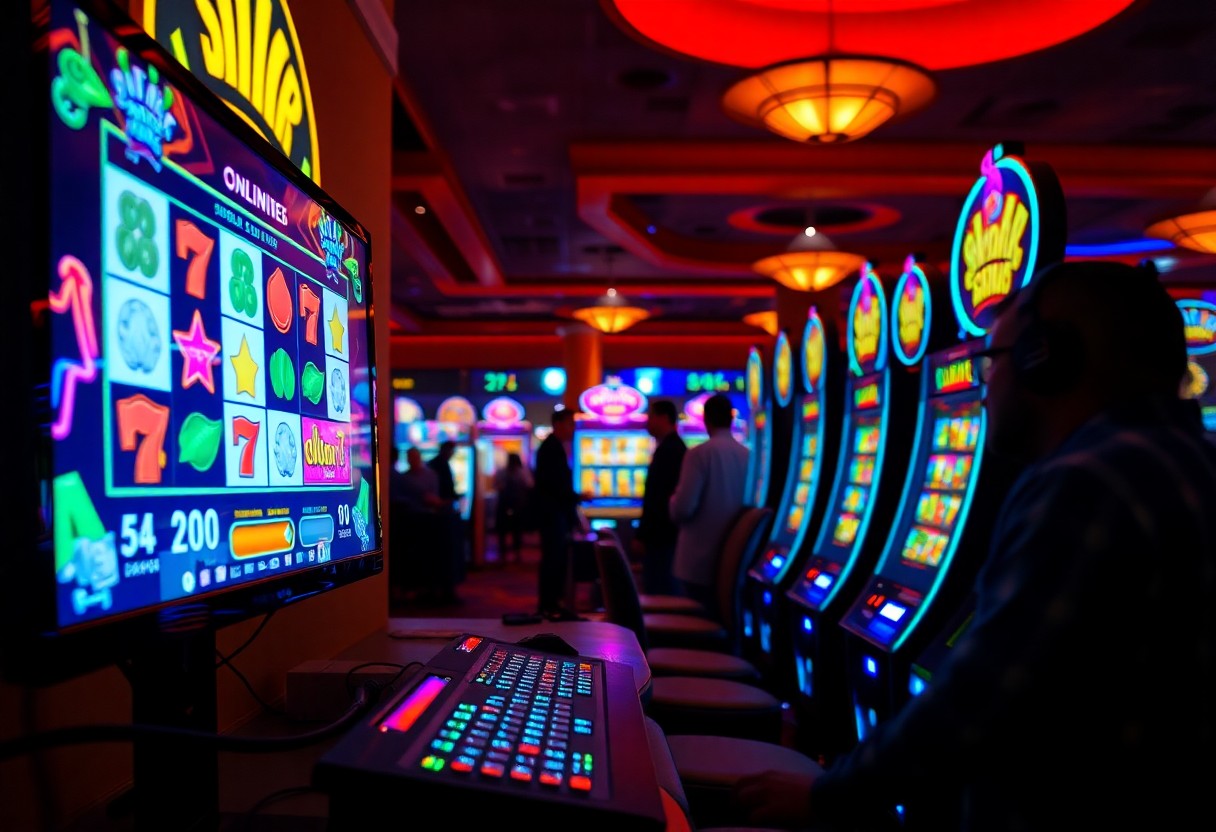
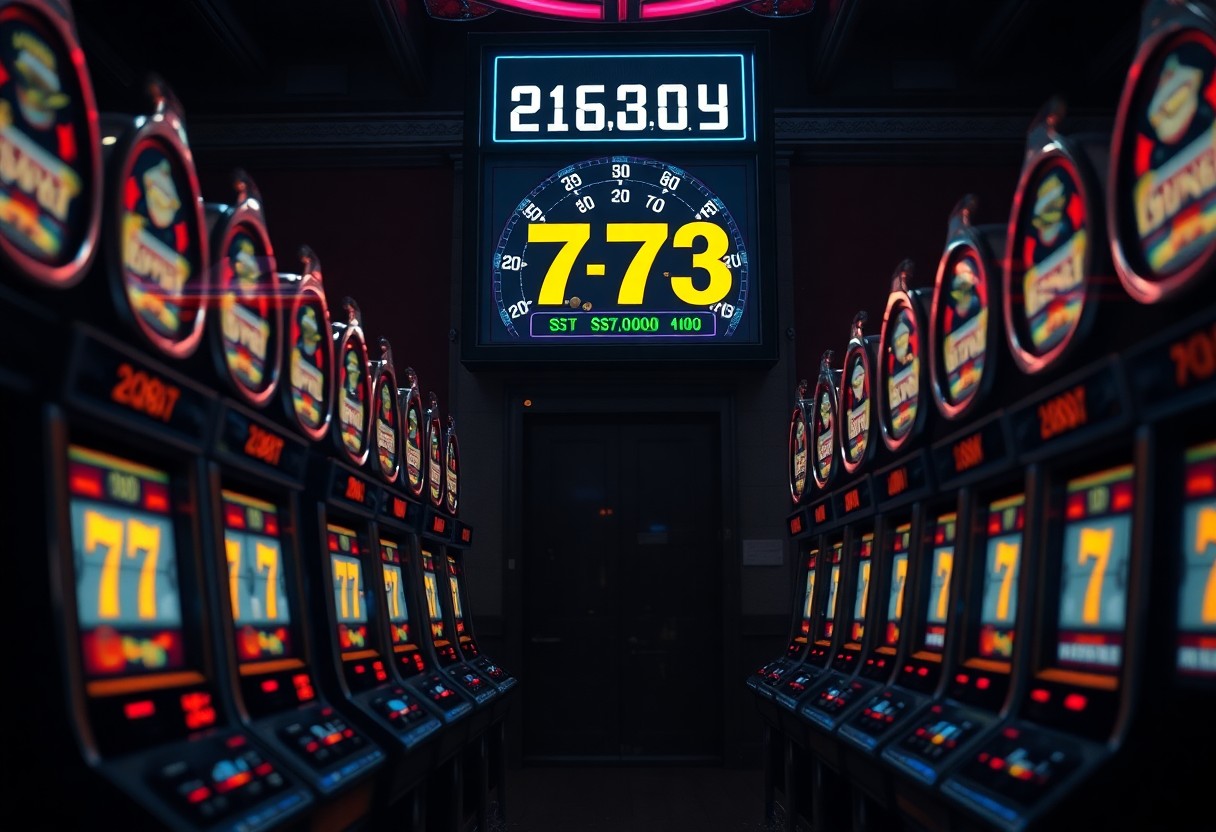
Jackpots in progressive slot networks combine game design and behavioral psychology to produce powerful appeal: their huge, life-changing prizes and visible meter growth create constant allure, while engineered feedback-near-miss signals and variable-ratio reinforcement-exploits reward learning, and social proof and accessibility amplify engagement; the result is a system that is both extremely rewarding and potentially dangerous for vulnerable players, demanding informed awareness from regulators and users alike.
Types of Progressive Jackpots
Progressive jackpots vary by scope and mechanics: some pool bets across dozens of machines while others grow on a single unit, changing hit frequency and payout size. Networked versions can produce multi-million wins thanks to volume, whereas standalone progressives often deliver smaller, more frequent payouts tied to one machine or casino. Operators also use seeded jackpots to attract attention and random-drop triggers to diversify wins. Any change in format shifts player strategy and expected volatility.
- Networked Progressive
- Standalone Progressive
- Local Progressive
- Seeded Jackpot
- Random Drop
| Format | Networked vs Standalone |
| Reach | Hundreds-thousands of machines vs single casino/machine |
| Funding | Small fraction of many wagers vs percentage of one machine’s bets |
| Typical Jackpot | Often >€1M for large networks; tens-hundreds of thousands for standalone |
| Trigger | Bonus round, special symbol, or random-drop mechanics |
Networked Progressive Jackpots
Often linked across hundreds or thousands of terminals and online sites, networked progressives pool a tiny portion of every wager to build massive pools-Mega Moolah-style networks have produced payouts in the multi-million-euro range (one historic payout exceeded €17.8M). Operators rely on volume: more players accelerate growth, increasing headline-value jackpots that drive marketing and risk-taking. Funding is transparent in RTP tables, and triggers typically occur via bonus wheels or rare symbol combinations tied to the networked game.
Standalone Progressive Jackpots
Found on single machines or within one casino, standalone progressives grow from that machine’s bets and therefore increase more slowly but hit more often; typical prizes range from a few thousand to several hundred thousand dollars. Casinos use them to create local excitement-land-based examples include branded Wheel-of-Fortune cabinets-where the jackpot is won via a dedicated bonus game or specific reel alignment. Payouts are large enough to attract attention yet remain within the venue’s risk appetite.
Operators sometimes seed standalone pools with an initial amount to jump-start interest, and contribution rates can be adjusted to balance frequency versus headline size. In practice, these machines show higher short-term hit rates and lower volatility than networked counterparts, so players chasing regular, modest jackpots often prefer standalone units; house exposure is easier to manage and marketing teams can promote recent local winners to sustain foot traffic.
Factors Contributing to Addictiveness
Variable payout schedules, visible progressive meters and sensory design combine to make play persistent: variable-ratio rewards create high response rates, near-miss outcomes prolong sessions, and visible large jackpots skew risk perception. Game volatility and reduced base RTP from jackpot contributions also extend chasing behavior. Any exposure to oversized jackpots and intermittent rewards can heighten compulsive play and increase session lengths.
- progressive jackpots
- intermittent reinforcement
- near-miss
- jackpot size
The Role of Jackpot Size
Huge prize figures, often climbing from tens of thousands to over $10 million, create a powerful salience effect: players overweight the tiny chance of a windfall even when odds are 1 in several million. Advertised jackpots inflate perceived value and can override rational bankroll limits, with many players increasing stakes as the meter rises and chasing the probability mismatch between perceived and actual expected value.
Game Design and Mechanics
Design choices-hit frequency, volatility, bonus triggers and audiovisual cues-steer behaviour: high volatility yields rare big wins, low hit frequency keeps players pressing, and flashy bonus animations act as momentary reinforcers. Operators tune these levers alongside a progressive contribution to maximize engagement, leveraging variable-ratio learning and sensory feedback to sustain play.
More specifically, typical slot hit frequencies range from about 10-30%, RTPs sit roughly between 85-98%, and progressive contributions often reduce base RTP by a few tenths to several percentage points. Bonus rounds and escalating meters increase session length; combined with near-miss programming and immediate audio-visual rewards, this creates repeated reinforcement cycles that are highly effective at maintaining play.
Tips for Playing Progressive Jackpots
- Choose between standalone and networked progressive jackpots; standalone ones often have smaller pools but better hit frequency, networked ones can reach millions but hit far less often.
- Confirm whether a max bet is required to qualify for the jackpot-many titles demand it, so bet strategy must reflect that rule.
- Prioritize games with transparent payouts and published jackpot histories; a $5M+ progressive that hasn’t paid in years signals long odds.
- Match your play to tight bankroll management: set session limits in spins or dollars, for example 100-500 spins or $50-$500, depending on bet size.
- Balance thrill and risk by checking RTP and odds; higher RTP (95%-98%) can extend play even if jackpot odds remain low.
Bankroll Management
Allocate a dedicated bankroll for progressive play and size your bets so you can absorb volatility-if the average bet is $0.50, plan for 200-1,000 spins per session; with $2 bets, reduce that to 50-250 spins. Use stop-loss and profit-take rules, cap consecutive losing sessions, and avoid chasing resets by increasing stake size beyond your plan to qualify for a jackpot.
Understanding Odds and Payouts
Study the actual odds and how the jackpot is funded: many progressives divert 1-5% of each bet to the pool, so hit frequency is low-often millions to one for big networked jackpots-while local progressives may pay more often but at lower amounts. Check RTP and hit-rate stats when available.
Examine examples: a networked progressive that siphons 2% of bets might grow to $1M after millions of spins, meaning the chance of winning on any single spin can be well below 1 in 1,000,000; conversely, a local progressive taking 1% and capping at $50,000 could trigger every few thousand sessions. Max-bet requirements, contribution rates, and disclosed RTP are the best indicators of expected frequency. Recognizing the realistic hit rates helps you set limits and expectations.
Step-by-Step Guide to Playing Progressive Slots
| Step-by-Step Guide to Playing Progressive Slots | |
| Quick Steps |
Follow clear steps: check jackpot type (local vs networked), verify max-bet requirements, confirm RTP and volatility (progressives often have lower RTP, higher variance), set bankroll unit and bet to balance qualification and sustainability-bets of 0.5-2% per spin are common guidance, monitor the meter and stop when hitting a preset win or loss; jackpots can grow from thousands to millions. |
Choosing the Right Game
Compare RTP, volatility and jackpot structure: networked progressives deliver the biggest pooled prizes but usually show higher variance and lower base returns (many fall in the mid-80s to mid-90s%). Check the game’s paytable for max-bet to qualify, inspect meter transparency, and try the demo to gauge hit frequency; pick titles where the minimum/max bet fits your bankroll so you can sustain enough spins to have realistic chances.
Setting Limits and Goals
Set firm bankroll and time rules: choose a session loss cap (for example 2-5% of bankroll) and a stop‑win target (commonly 20-25%) to lock gains. Use betting units of 1-2% per spin, preset a maximum spins or 60‑minute timer, and enable site limits or auto-stop features. Chasing losses increases harm; treat jackpot play as low-probability entertainment, not an investment strategy.
Example plan: with a $500 bankroll, allocate $25 per session (5%), stake $2.50-$5 per spin (0.5-1%), stop if down $25 or up $50, and cap spins at 200. Log outcomes to detect escalation, use operator deposit/loss limits or self‑exclusion tools when needed, and set alarms or scheduled breaks-if you increase bet size after losses, pause immediately and reassess.
Pros and Cons of Progressive Jackpots
| Pros | Cons |
|---|---|
| Potential for life-changing payouts as pools grow across networks | Very low hit frequency for the top prize-often odds in the millions |
| Small wagers can sometimes trigger large wins, increasing accessibility | Many games require a max bet to qualify for the jackpot |
| Linked machines create sustained publicity and player excitement | Base-game RTP is often reduced to feed the progressive pool |
| Tiered progressives give occasional smaller wins that maintain engagement | Higher variance leads to longer losing streaks and larger bankroll swings |
| Progressive meters provide visible targets that boost play intensity | Opaque trigger conditions can confuse players about true odds |
| Some networks pay frequent mid-sized jackpots, offering steady wins | Contribution percentages (0.5-5%) steadily erode long-term returns |
| Cross-operator pools can produce record-breaking sums | Publicized jackpots can amplify problem gambling risks |
| Marketing events around jackpots create limited-time value plays | Prize resets mean long waits after a large payout to see big pools again |
Advantages for Players
Progressives give players a realistic shot at multi‑million wins: linked networks frequently push jackpots into the €1-€20+ million range, and even a few euros per spin can qualify on many titles. Public jackpots drive larger player pools, which accelerates meter growth and creates moments of high excitement; additionally, tiered systems and frequent small progressive payouts provide intermittent rewards that help sustain play without requiring huge stakes.
Disadvantages to Consider
Funding the jackpot typically reduces base-game RTP by about 0.5-5 percentage points, increasing variance and extending losing runs; combined with very long odds for the top prize and common max-bet requirements, this raises the cost of chasing jackpots and can erode bankrolls faster than standard slots.
When operators allocate a slice of each stake to the pool-commonly a few percent-the effective return to players drops (for example, a 2% contribution on a 95% RTP game lowers it to ~93%). Many progressives also hide trigger mechanics, so players betting less-than-max unknowingly forfeit jackpot eligibility. Regulators and behavioral studies have repeatedly flagged the potent mix of visible mounting meters and rare large wins as a factor that can intensify compulsive play, especially among vulnerable players.
Summing up
Drawing together the appeal of progressive jackpots: rapidly growing prize pools paired with variable-ratio rewards, attention-grabbing audiovisual design, near-miss feedback, and social proof produce high arousal and perceived opportunity. These mechanics, plus low-effort play and intermittent large wins, reliably reinforce repeated engagement and explain why progressive slots remain especially addictive for many players.
FAQ
Q: What psychological mechanisms make progressive jackpots so compelling?
A: Progressive jackpots tap into powerful reward systems: intermittent reinforcement (random, unpredictable wins) produces strong conditioning, near-miss visuals and sounds trigger the brain’s anticipation circuits, and the ever-growing jackpot creates salience and excitement. Cognitive biases such as the gambler’s fallacy and illusion of control lead players to overestimate their chances, while vivid jackpot displays and winner stories amplify the emotional pull. Together these factors heighten arousal and make continued play feel highly rewarding despite poor long-term odds.
Q: How do slot design and jackpot mechanics increase addictive potential?
A: Designers combine fast play, immediate feedback, frequent small wins, and occasional large payouts to keep engagement high. Progressive systems show a rising meter that signals increasing value, which acts like a visible goal and fuels urgency or FOMO. Audio-visual reinforcement, bonus triggers, near-miss animations, and low minimum bets lower barriers to repeat play, while linked or pooled jackpots promise life-changing payouts that skew risk perception and encourage longer sessions.
Q: What external factors amplify the pull of progressives and how can players reduce harm?
A: Publicized jackpots, social proof from recent winners, mobile access, and targeted marketing magnify attraction by normalizing high-stakes dreaming and making play constantly available. To reduce harm, players can set strict time and spend limits, use self-exclusion or reality checks offered by operators, avoid chasing losses when a meter climbs, and treat jackpots as entertainment rather than investment. Seeking professional help is advised when control over play diminishes.