
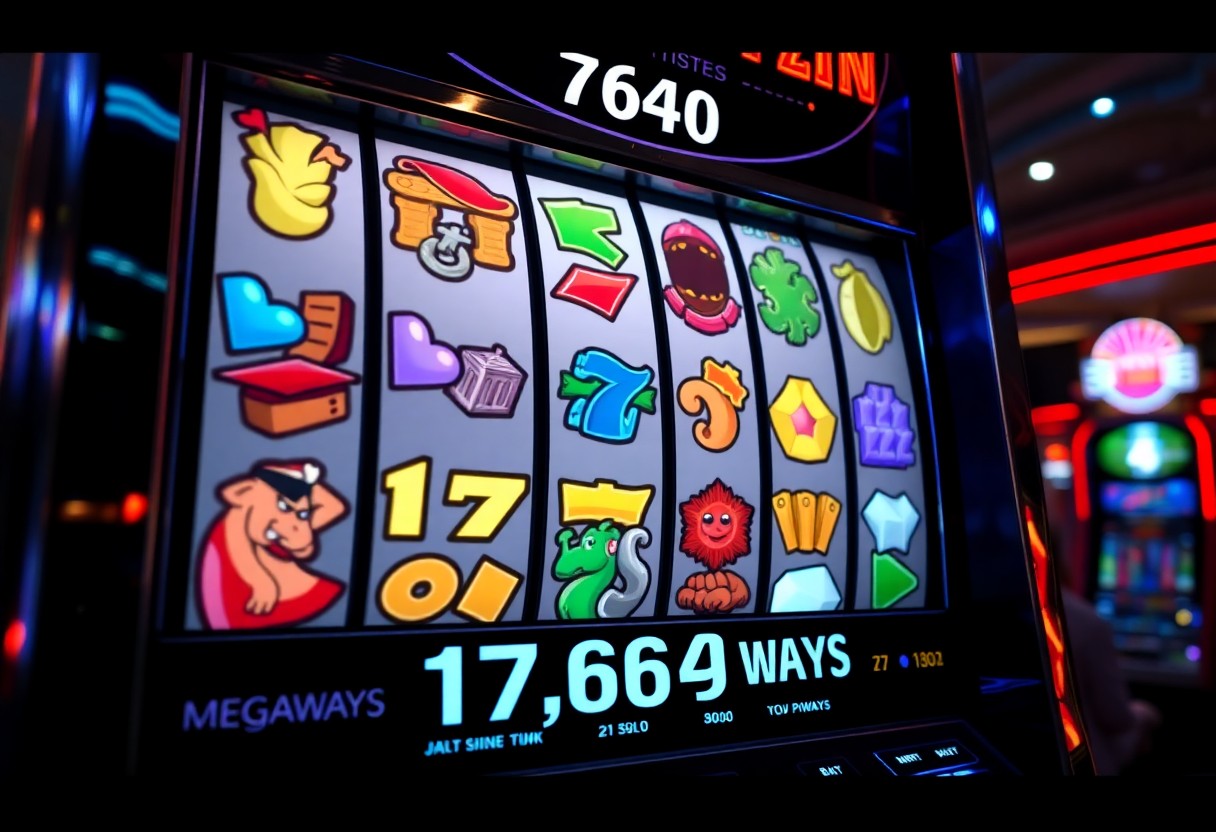
Megaways slots revolutionize reels with a variable number of symbols per spin, producing thousands of payways; they are highly volatile-which can cause rapid losses-but also offer the potential for massive wins, so understanding mechanics, bonus features, RTP and disciplined bankroll management is necessary for informed play.
What Are Megaways Slots?
Definition and Mechanics
Megaways slots use a dynamic reel modifier so each spin displays a varying number of symbols per reel, creating up to 117,649 ways to win on a 6-reel setup (7×7×7×7×7×7). Cascading (tumbling) wins, random multipliers and expanding symbols frequently combine with free spins and bonus rounds, producing highly volatile sessions where a single spin can trigger multiple consecutive payouts.
Evolution of Megaways Technology
Big Time Gaming introduced the mechanic and released landmark titles like Bonanza (2016), then licensed the system to studios such as Blueprint and Pragmatic Play, driving rapid adoption; within a few years the market saw dozens of Megaways releases that added features like bonus buys and progressive multipliers, and platform providers optimized the engine for mobile and live RTP reporting.
Further evolution brought hybrid mechanics: developers layered Megaways with cluster pays, 7-reel variants and networked jackpots, while analytics-guided tuning adjusted hit frequency and volatility. For example, Extra Chilli and Fishin’ Frenzy Megaways illustrate how studios tailor reel range and bonus triggers to target specific volatility profiles and player segments.
Types of Megaways Slots
Developers typically split Megaways into distinct styles: classic dynamic-reel games with up to 117,649 ways, cascading/avalanche titles that chain wins, multiplier-driven variants that grow payouts during spins, branded/licensed adaptations, and jackpot-focused systems like Megapays. Reel heights usually vary between 2-7 symbols, producing wide variance in hit frequency; RTPs commonly sit around 94-96%. Players must be aware of the high volatility. Any titles with jackpot mechanics or buy-bonus options increase risk and reward.
- Megaways classic
- Cascading Megaways
- Megaways with multipliers
- Branded Megaways
- Megapays / Jackpot Megaways
| Classic Megaways | Dynamic reels, typically 6 reels, up to 117,649 ways, generally high volatility |
| Cascading Megaways | Winning symbols removed then replaced to enable chains and extended wins |
| Multiplier Megaways | Rolling or growing multipliers during base game or free spins increase payout potential |
| Branded Megaways | Licensed IPs with tailored bonuses, narrative focus and premium audiovisuals |
| Megapays / Jackpot | Separate progressive or fixed jackpots that raise variance and stakes |
Popular Themes and Variants
Study of the catalogue shows hundreds of titles across ancient civilizations, adventure, fantasy and movie-branded themes; developers commonly layer stacked wilds, expanding reels and buy-a-bonus features to differentiate mechanics. Studios use theme-driven tweaks-such as expanding reels in fantasy slots to exceed standard way counts-to boost engagement and session value.
Notable Game Titles
Key exemplars are Bonanza (Big Time Gaming, 2016), which popularized the mechanic with up to 117,649 ways; White Rabbit, notable for expanding reels reaching 248,832 ways; and Extra Chilli, a high-volatility favourite that introduced widely used bonus-buy options in regulated markets.
Big Time Gaming’s release of Bonanza triggered industry-wide adoption, prompting studios like Pragmatic Play and Blueprint to produce their own Megaways entries-Pragmatic often adds free-spin multipliers, while Blueprint experimented with progressive jackpot spins. White Rabbit demonstrated how reel expansion multiplies both volatility and maximum combo counts, and operators report these mechanics tend to increase average session engagement in markets where bonus buys are permitted.
Unique Features of Megaways Slots
Dynamic Reels and Winning Potential
Dynamic reel heights alter symbol counts per spin, typically between 2 and 7 symbols per reel, creating from a few hundred up to 117,649 ways to win; Bonanza’s 6-reel layout is a prime example. Game providers tune RTP and variance, so titles like Extra Chilli and Bonanza deliver high volatility, meaning occasional very large payouts but greater short-term bankroll swings.
Cascading Wins and Bonus Features
Cascading wins (Avalanche mechanics) remove winning symbols and drop new ones, enabling multiple consecutive wins from a single spin; Gonzo’s Quest popularized the concept and Megaways slots pair it with free spins, retriggers and rising multipliers to magnify outcomes. Many developers combine cascades with bonus buys or progressive multipliers to create sustained win chains.
In practice cascades fuel the biggest payout moments: during free-spin rounds multipliers can increase with each fall, and some Megaways games allow dozens of consecutive cascades that compound wins rapidly. Studios often offer bonus-buy options to access these sequences instantly-a feature that can be lucrative but is also riskier for player bankrolls.
Tips for Playing Megaways Slots
- Prioritize Bankroll Management: set session stakes and loss limits, e.g., bet 1-2% per spin.
- Match playstyle to Game Volatility: high variance offers big win potential but longer dry spells; some Megaways pay rare top prizes of 1,000×-10,000×.
- Check the RTP and paytable; prefer titles ≥96% when possible and note max multipliers.
- Use demo mode to sample 500-1,000 spins and estimate hit frequency before staking real funds.
- Avoid chasing losses and limit auto-play; rapid stake increases can drain a bankroll fast.
Bankroll Management
Divide your total funds into session units and size bets at about 1-2% of the bankroll; for example, a $300 bankroll pairs with $3-$6 bets. Set a stop-loss (e.g., 30% of session funds) and a profit target (e.g., 50% gain), then walk away. Use smaller unit sizes on known high-variance Megaways to cover potential dry spells and preserve playtime.
Understanding Game Volatility
Volatility describes payout frequency and magnitude: high-volatility Megaways often show low hit frequency but larger payouts, while low-volatility games deliver frequent, smaller wins. For instance, a high-variance title might require hundreds of spins between significant wins, whereas a low-variance variant pays modest wins every 10-30 spins. Factor variance into session length and stake choices.
Perceiving volatility by running 500-1,000 demo spins reveals practical patterns-if average hit frequency is under ~15% and major wins appear very sporadically, plan a bankroll that covers at least 200-500 spins at your intended stake and adjust bet size to sustain play through inevitable dry runs.
Step-by-Step Guide to Playing Megaways Slots
Quick Steps
| Step | Action |
| 1. Pick a game | Check RTP, volatility, max Megaways (commonly up to 117,649) and bonus mechanics before playing. |
| 2. Set your bankroll | Decide session stake and per-spin bet (aim 1-2% of bankroll); use demo play to test hit frequency. |
| 3. Adjust bet size | Match bet to volatility-smaller bets for high variance, larger for frequent-play low variance. |
| 4. Learn the paytable | Study symbol payouts, cascade behavior and multipliers; note which symbols trigger free spins or modifiers. |
| 5. Use features wisely | Activate autoplay cautiously and exploit bonus buys or free spins only when math and bankroll align. |
Choosing the Right Game
Evaluate titles by RTP (many Megaways sit around 95-96.5% RTP), volatility and feature frequency; for example, Bonanza has ~96% RTP and frequent cascades, while some newer releases push volatility higher with bigger bonus multipliers. Opt for games with a min bet that fits your balance-if your bankroll is $100, prefer min bets ≤ $0.10 to allow longer sessions and safer variance exposure.
Placing Bets and Understanding Paylines
Set bets relative to bankroll-common guidance is 1-2% per spin, so a $100 bank suggests $1-$2 bets; many Megaways accept ranges from ~$0.10 up to $100. Paylines change each spin as reel heights vary, producing up to 117,649 ways on 6 reels with 7 symbols each; wins form from adjacent-reel matches and cascades can create extra wins from a single spin, amplifying outcomes and volatility.
Delve deeper into mechanics: each spin generates a specific combination count by multiplying symbol counts per reel, so a 6-reel spin with heights 7-7-7-7-7-7 yields 7^6 = 117,649 ways. Payouts use the paytable value for a symbol multiplied by the number of distinct winning combinations; cascading removes winning symbols and can produce several consecutive payouts from one bet. Features such as win multipliers, feature retriggers and bonus buy options dramatically shift expected variance-use demo mode to observe bonus trigger rates and adapt staking (flat-betting, scaling bets, or volatility-targeted stakes) to your risk tolerance and objective.
Factors Influencing Gameplay Experience
Reel heights, max ways per spin, modifier frequency, and feature design all shape session feel; for example, titles like Bonanza (up to 117,649 ways) deliver frequent cascades and rising multipliers, while games such as White Rabbit Megaways can expand to 248,832 ways, intensifying variance. Platform RNG tuning and mobile performance also affect hit timing and animation pacing. Recognizing how these elements combine lets players match games to their risk tolerance and playstyle.
- Megaways
- RTP
- Volatility
- Hit frequency
- Modifiers
- Free spins
- Max ways
RTP and Volatility Considerations
Many Megaways slots sit in the roughly 94%-97% RTP band; Bonanza is commonly listed at ~96% as an example. Higher volatility titles yield larger payouts but lower hit frequency, so expect longer dry spells and steeper bankroll swings. Operators often offer bonus-buys that change effective variance and can alter value perception, making session planning and staking strategy more important for sustained play.
Impact of Game Design
Dynamic mechanics like cascading reels, increasing reel heights and stacked symbols directly influence payout distributions; cascading chains can generate sequences of wins with built-in multipliers, materially increasing top-end outcomes. Visual feedback and sound design also steer perceived volatility-fast, frequent animations can mask low hit frequency, while slow, dramatic cues highlight big wins. Long losing streaks and huge single-spin payouts are design-driven realities.
Further, specific design choices determine expected session length and bankroll requirements: a game with many small cascades and a 20-30% hit frequency favors longer sessions, whereas titles with sparse but massive bonus triggers require larger bankroll buffers. Developers sometimes publish hit-frequency metrics or volatility tags; where unavailable, studying paytable frequency and bonus-trigger odds (e.g., free spins at 1:500-1:2000 spins in some high-variance Megaways) helps estimate risk. Higher RTP doesn’t negate high variance.
Pros and Cons of Megaways Slots
Megaways titles offer massive win potential and dynamic reel setups that change each spin, often creating up to 117,649 ways to win. While this delivers volatility-driven excitement and big bonus wins, it also means more erratic hit frequency and bankroll swings. Expect titles with varied RTPs (commonly ~95-96%) and max payouts ranging from a few hundred to over 10,000× stake in rare cases, so weigh upside against the higher variance.
| Pros | Cons |
| Up to 117,649 ways on many games | Often high volatility, long losing runs |
| Frequent, dramatic bonus rounds (free spins, multipliers) | Bonus triggers can be infrequent (e.g., 1 in 50-200 spins) |
| Innovative mechanics and varied reel heights | Complex rules can confuse casual players |
| Potential for very large payouts (thousands× stake) | Big wins are rare and require sustained bankroll |
| Strong engagement-titles like Bonanza (2016) set standards | Some games have lower RTPs than classic slots |
| Compatible with many volatility-management features | Variance makes short sessions less predictable |
| Frequent remakes and branded Megaways variants | Market saturation-quality varies widely |
| Good for players chasing big, memorable wins | Not ideal for steady, low-risk playstyles |
Advantages of Playing Megaways
Players gain access to dynamic reel mechanics that change payline counts each spin, boosting unpredictability and excitement; Big Time Gaming’s Bonanza (2016) popularized the format with up to 117,649 ways and strong multiplier chains. Many Megaways titles pair with engaging bonus features-cascades, unlimited multipliers, and buy features-delivering frequent high-intensity sessions and the possibility of very large payouts for disciplined players.
Disadvantages to Consider
Most Megaways slots lean toward high variance, producing long cold streaks and requiring larger bankrolls to weather swings; some RTPs dip below classic averages and bonus triggers can be scarce, so session volatility is higher than fixed-payline games. Complexity also means outcomes feel less transparent, which can unsettle players used to simpler mechanics.
More specifically, free-spin triggers in many Megaways can occur as infrequently as 1 in 50-200 spins, and while max wins sometimes exceed 5,000-10,000× stake, those outcomes are extremely rare. Bankroll management and bet-sizing strategies matter: reducing bet size or using casinos with good volatility options mitigates risk, but the inherent swinginess remains a defining drawback.
FAQ
Q: How do Megaways mechanics work and how do they create thousands of ways to win?
A: Megaways slots use a variable-reel-height system where each reel displays a random number of symbols on every spin (commonly between 2 and 7). The total number of winning ways for a spin is calculated by multiplying the number of symbols shown on each reel (for example 7×7×7×7×7×7 = 117,649). Instead of fixed paylines, wins are formed by matching symbols on adjacent reels from left to right, so the combination count changes every spin. Many Megaways titles pair this with cascading (avalanche) mechanics that remove winning symbols and let new ones fall into place, enabling multiple consecutive wins from a single stake and further altering the effective ways to win within a round.
Q: What gameplay features and modifiers are commonly paired with the Megaways engine?
A: Developers often add features that exploit dynamic reel layouts: cascading wins, free spins with retriggers, win multipliers that increase with each cascade, and expanding reels or extra rows that boost the maximum number of ways. Wilds, scatters, and special modifier symbols (such as bonus symbols that expand symbol counts or convert symbols into higher-value ones) are frequent. Some games include xWays/xNudge mechanics that split symbols into multiple positions or nudge reels for extra matching potential. These layered features create volatile, high-impact sessions with varied win patterns and frequent bonus-round interactions.
Q: How do Megaways affect volatility, RTP, and player strategy?
A: Megaways slots typically exhibit higher variance because the number of ways and the presence of big multipliers or feature-triggered payouts create a wide distribution of win sizes-many small or no-win spins intermixed with occasional large payouts. RTP is set by the game and can range in a similar band to other slots, but hit frequency can feel lower because wins can be concentrated in bonus sequences. Strategy-wise: manage bankroll for swings by using smaller bet units, check the game’s RTP and volatility indicators if available, try demo play to learn feature behavior, and prioritize titles with bonus structures you enjoy (free spins, multipliers, or frequent cascades). Adjust session length and stake size to match the elevated variance of Megaways mechanics.