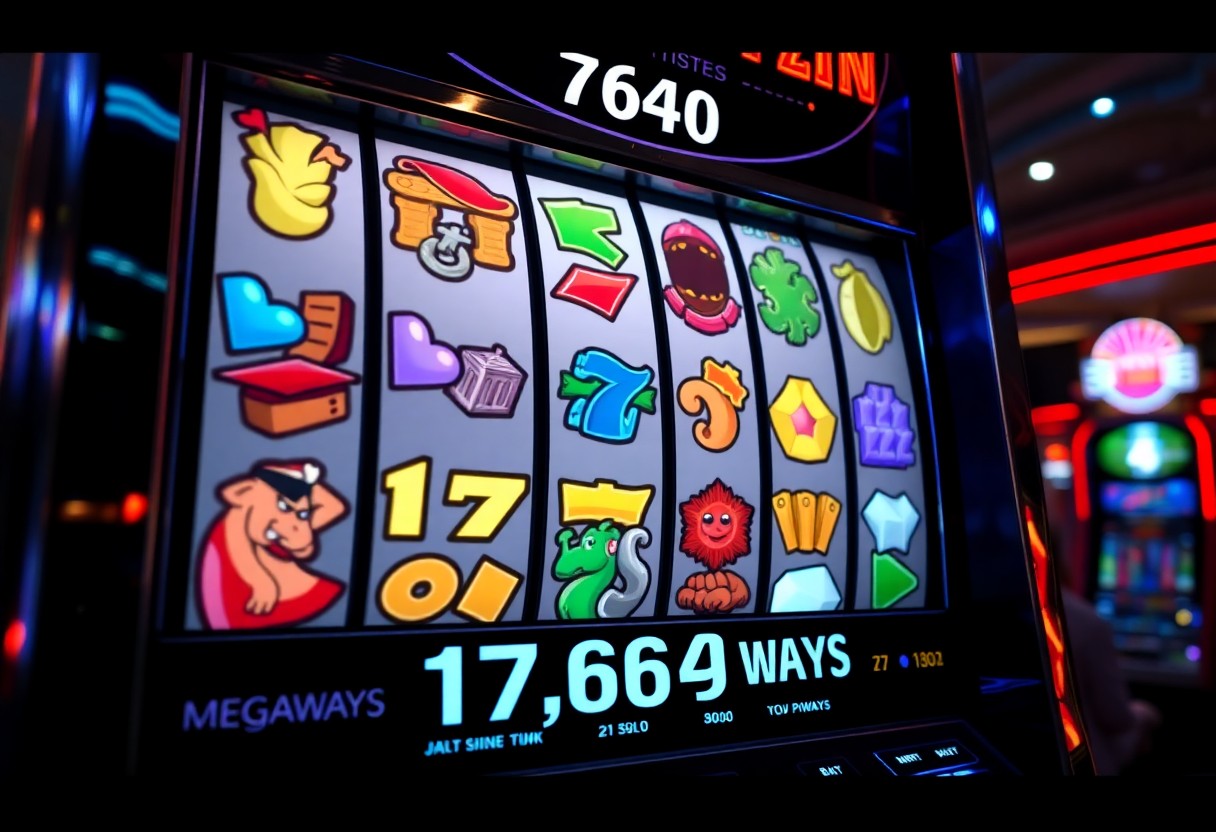

There’s a clear evolution from mechanical 3-reel simplicity to feature-rich 5-reel video slots, and this guide breaks down formats, mechanics, RTP and volatility, highlighting how higher volatility increases risk of bigger losses while expanded paylines and bonus rounds offer larger jackpot potential, giving players an authoritative roadmap to match formats to strategy.
Understanding Slot Machine Formats
Across casino floors and online lobbies the split between 3-reel and 5-reel formats shapes design and player experience: 3-reel machines trace to Charles Fey’s Liberty Bell (1895) and typically use 1-3 paylines, while 5-reel video slots offer 10-100 paylines or configuration-based “ways” like 243, 1,024, or Megaways up to 117,649. Operators tune RTPs (often ~92-97%) and volatility to balance payout frequency and jackpot size; higher volatility accelerates bankroll swings.
3-Reel Slot Machines
Simple mechanical heritage defines 3-reel slots: most have a single payline, classic symbols (BAR, cherries, Liberty Bell) and straightforward odds derived from fixed reel strips. Modern digital 3-reels mimic that clarity with RNGs and can feature adjustable bet levels, but limited paylines mean lower hit frequency and tighter variance, making them ideal for low-complexity play and quick sessions.
5-Reel Slot Machines
Modern 5-reel slots expand complexity with stacked wilds, scatters, multipliers, free spins and interactive bonus rounds; popular titles like Starburst, Gonzo’s Quest and Book of Dead use five reels to deliver immersive mechanics. Operators deploy paylines (10-50) or “ways to win” systems (243/1,024) to increase combinatorial outcomes, producing larger jackpot potential but often higher variance compared with 3-reel designs.
Mechanically, paylines vs. ways matter: paylines pay by line patterns, while 243/1,024/117,649 systems pay by matching symbols across reels regardless of position. Game engines use symbol substitution, cascading reels and multiplier stacks to multiply wins; RTPs typically range from mid-90s to high-90s percent. Test volatility in demo mode and adjust bet sizing, since feature-rich 5-reels can drain bankrolls faster despite higher payout ceilings.
Types of Slot Machines
Across floors and lobbies operators offer distinct formats: 3-reel classics favor simplicity with 1-5 paylines and straightforward RTPs, while 5-reel video slots introduce bonus rounds, wilds, and complex pay structures. Examples range from single-line mechanical titles to Megaways variants with up to 117,649 ways. Volatility and RTP (commonly 85-98%) influence choice; paytables and bet sizing determine risk versus reward.
| 3-Reel (Classic) | Single to a few paylines, mechanical feel, lower feature density, ideal for low-complexity play and nostalgia. |
| 5-Reel (Video) | Multiple paylines, expanding symbols, free spins, can offer 243, 1024 or Megaways mechanics for huge combinations. |
| Progressive | Jackpots pooled across machines/networks; famous examples include Mega Moolah (~€18.9M) and Mega Fortune (~€17.8M). |
| Branded & Feature | Licensed IPs and cinematic bonuses drive engagement; often higher marketing push and varied RTPs. |
| Hybrid/Skill-based | Combines chance with interactive rounds or skill elements; growing in arcades and targeted venues. |
- 3-reel
- 5-reel
- video slots
- progressive jackpot
- Megaways
Classic vs. Video Slots
Classic machines typically offer 1-5 paylines, fixed reels and straightforward payouts, while video slots introduce multiple paylines, interactive bonuses, and math models supporting volatile wins; many modern video titles advertise 243, 1024, or up to 117,649 ways to win. Average stake patterns differ-classics suit small, steady bets; video slots reward feature triggers and higher variance play.
Progressive Jackpots
Progressives aggregate a percentage of each bet (commonly ~0.25-3%) into a growing pool; they come as local jackpots or wide-area networked pots. Networked games have produced multi-million payouts-Mega Moolah paid about €18.9M-and typically reset to a seed value after a hit, affecting long-term payout distribution.
Mechanically, local progressives grow from a smaller device pool and hit more frequently at lower amounts, while networked progressives pool thousands of players, creating game-changing top prizes; developers set seed values (often €10-€500) and contribution rates, and operators tune release frequency via hit algorithms. Thou should track jackpot type and contribution percent when choosing pursuit strategies.
Tips for Playing Slot Machines
Weigh game mechanics and house edge: many online slots list RTPs of 94-97%, while brick-and-mortar machines often run lower; compare volatility-high volatility pays bigger but rarer wins-and align bet size with paylines, since 3-Reel classics usually have fixed paylines versus 5-Reel video slots offering 20-100 lines. A 96% RTP implies a theoretical loss of $40 per $1,000 wagered over many spins. After you measure RTP and volatility, set clear session limits and choose machines that fit your risk tolerance.
- 3-Reel
- 5-Reel
- RTP
- Volatility
- Paylines
Bankroll Management
Allocate a session budget of 2-5% of your total bankroll and cap individual bets at 0.5-2% of that bankroll; for example, a $500 bankroll suggests sessions of $10-25 and maximum spins of $2-10. Stagger bet size when volatility is high to preserve playtime, and use a hard stop-loss to prevent chasing losses. Adjust sizes after wins to lock in gains.
Knowing When to Quit
Set explicit exit rules: a stop-loss (e.g., 25-30% of session budget) and a win target (commonly 50-100% gain) prevent impulsive decisions. Track elapsed time-sessions longer than 60-90 minutes often degrade discipline-and log results to spot patterns. Exiting on a small profit preserves RTP advantage and prevents bankroll erosion from extended play.
Example: with a $100 session budget set a $25 stop-loss and a $50 win target; hitting either requires leaving the machine. Use a timer for a hard 60-90 minute cap and avoid increasing bets after loss streaks-players commonly raise stakes impulsively. Exiting on predefined rules reduces emotional play and preserves long-term bankroll.
Step-by-Step Guide to Playing Slots
Quick Steps
| Step | Action |
|---|---|
| Choose machine | Check RTP (92-98%), volatility (low/med/high), paylines and jackpot type |
| Set bankroll | Decide session limit (e.g., $50-$200) and unit bet size |
| Place bets | Adjust coin value and lines; note some jackpots need max bet |
| Spin & manage | Use spin/auto-play, track wins/losses, use bonus rounds strategically |
Choosing the Right Machine
Check the RTP first-most reputable slots range from 92-98%. Compare volatility: low volatility suits frequent small wins, high volatility targets rare big payouts; a classic 3-reel slot often has lower volatility than a 5-reel video slot. Inspect paylines, bonus features, and whether the jackpot is fixed or progressive, since progressives commonly require higher bets to qualify.
Placing Bets and Spinning the Reels
Start by setting coin value and active paylines-many machines show minimum bets like $0.01 per line; for example, 25 lines at $0.01 equals a $0.25 spin. Note that some titles require a max bet to trigger jackpots or special bonuses. Use the spin button for single plays or autoplay cautiously; autoplay can accelerate losses on high-volatility games.
Study the pay table before increasing wagers: RTP doesn’t change with bet size, but payout eligibility can. Try demo mode to assess hit frequency and bonus triggers; many games need specific coin multipliers-such as 3 coins per line-to access top-tier prizes. Balance bet size against session bankroll and set loss limits to manage variance effectively.
Factors to Consider When Choosing a Slot Machine
Machine choice hinges on several measurable features: RTP, volatility, reel layout, bet range and bonus mechanics all alter expected value and experience. Examine machine panels and game info-many list RTP 95-98% and hit frequency so you can compare. Test demo modes for a few hundred spins to sense payout rhythm. Thou should match volatility and bet size to bankroll and session goals.
- RTP
- Volatility
- Hit frequency
- Bet limits
- Bonus features
Return to Player (RTP)
RTP indicates long-run percentage returned to players; aim for RTP 96%+ when possible. Starburst, for example, posts ~96.1% RTP, whereas some progressive-jackpot titles fall into the low 90s. Compare RTP on game pages and factor it into stake planning: a 97% RTP implies a 3% house edge over many thousands of spins.
Volatility and Payout Frequency
Volatility defines win size versus frequency: high volatility yields rare but large payouts (think 100x+), while low volatility provides frequent small wins (often under 5x). Choose high volatility for chase-style play and big-payoff potential, low volatility to stretch bankroll and lengthen sessions; medium volatility balances both approaches.
Hit frequency-the percent of spins producing a payout-often ranges between 10-30%, directly driving variance; a slot with 15% hit frequency and high volatility can produce losing runs exceeding 200 spins. Manage risk by adjusting bet size: with high volatility, keep bets under 1% of bankroll and expect longer sessions; with low volatility, 2-3% bets maintain play while smoothing returns.
Pros and Cons of 3-Reel vs. 5-Reel Slots
Comparing the two formats shows clear trade-offs: 3-reel machines favor simplicity and lower stakes with often 1-3 paylines, while 5-reel titles deliver more paylines (20-243 or 243-1024 ways), multimedia features and higher jackpot potential; this typically means faster, cheaper play on 3-reels versus feature-rich, higher-variance sessions and larger bet requirements on 5-reels.
| Pros | Cons |
|---|---|
| Simple rules and interface, ideal for beginners | Limited bonus features and thematic variety |
| Lower cost per spin, often single-line or few paylines | Higher bet requirements when many paylines are enabled |
| Faster spin cycles-more rounds per hour | Complex paytables can obscure true odds |
| Easy to calculate wins and volatility | Greater volatility in many 5-reels leads to long cold streaks |
| Good fit for short sessions and small bankrolls | Feature-driven design can encourage higher spending |
| Classic aesthetic appeals to nostalgic players | Less replay value for players seeking depth |
| Lower development complexity => often transparent RTPs | More features can mask RTP and hit frequency |
| Can host progressive jackpots while staying simple | Higher max payouts on many 5-reels but with bigger risk |
Advantages of 3-Reel Slots
Players benefit from clear mechanics-typically 1-3 paylines-making paytables easy to read and strategies straightforward; lower minimum bets and quicker spin cycles let players stretch a small bankroll, and some classics still offer progressive jackpots, so you get nostalgia plus occasional large wins without the complexity of modern bonus ecosystems.
Disadvantages of 5-Reel Slots
While 5-reels deliver immersive bonus rounds and many paylines (commonly 20-243 or 243-1024 ways), they also bring larger stake requirements, higher variance and paytable complexity that can hide true win frequency, meaning sessions can consume bankrolls faster and require more disciplined bet sizing.
For example, a 25-payline 5-reel at $0.10 per line costs $2.50 per spin, versus a 3-reel single-line play at $0.25; that 10× difference reduces spin count dramatically-someone with a $100 bankroll gets ~40 spins on the 25-line example but 400 spins on the single-line-so volatility and hidden bonus triggers can turn potential big wins into extended dry runs without careful bankroll management.
Final Words
Hence this review of “From 3-Reel To 5-Reel – A Breakdown Of Slot Machine Formats” demonstrates how mechanical simplicity evolved into digital complexity, influencing game design, volatility, and player engagement; understanding these format differences enables players and designers to assess payback models, feature layering, and the historical trajectory of slot development.
FAQ
Q: What are the technical and gameplay differences between 3-reel and 5-reel slot machines?
A: 3-reel slots use three spinning columns and generally offer simple payline structures (often a single horizontal line or a few fixed lines), classic symbols and straightforward win conditions; they mimic mechanical fruit machines. 5-reel slots use five columns, support many more paylines or “ways to win,” and enable layered mechanics such as wilds, scatters, multipliers, cascading reels, and bonus rounds. The increased reel count multiplies combinatorial possibilities, so 5-reel games deliver more varied outcomes and feature-driven play while 3-reel games deliver faster, more predictable action. Both types can be designed with a wide range of volatility and RTP figures, but the user experience differs: 3-reel focuses on simplicity, 5-reel emphasizes complexity and engagement.
Q: Which format tends to offer larger jackpots and richer bonus features?
A: 5-reel formats are far more likely to include elaborate bonus features (interactive mini-games, free-spin mechanics, progressive jackpots, and multi-level bonuses) because the additional reel positions allow for more symbol interactions and trigger conditions. Progressive jackpots are commonly tied to 5-reel video slots and networked casino systems, though fixed high-pay jackpots can exist on either format depending on the game design. 3-reel titles typically offer single-screen or single-line payouts and simpler bonus mechanics; when they do offer large payouts, those are usually fixed rather than progressive. Always check the paytable and jackpot mechanics: feature depth and top-prize potential are determined by the game’s design, not the reel count alone.
Q: How should a player change strategy when switching between 3-reel and 5-reel slots?
A: Start by studying the paytable and volatility for each game: on 5-reel slots you may need to cover many paylines to access small frequent wins and bonuses, so adjust bet-per-line and total stake accordingly; on 3-reel slots fewer paylines mean bets concentrate on fewer combinations, so wager sizing affects hit frequency differently. Use demo mode to learn bonus triggers and variance, set session and bankroll limits to account for potentially higher variance on feature-rich 5-reel titles, and prefer smaller unit bets when exploring unfamiliar mechanics. Finally, prioritize games with clear RTP disclosures and avoid increasing stakes to chase specific features-manage exposure to variance instead of trying to time outcomes.