
What makes a slot machine’s spin feel truly unpredictable?
When you press “spin,” the result appears instant, but beneath that simple action is a stream of mathematical decisions made by a Random Number Generator (RNG). You don’t watch a mechanical wheel settle; you interact with software (or hardware) that produces a sequence of numbers so the outcome feels random every time. Understanding the basics helps you see why no two spins are connected and why short-term wins and losses are part of expected behavior.
The heart of randomness: how RNGs generate numbers
Most modern slots use a pseudo-random number generator (PRNG), which is an algorithm that creates a long sequence of numbers that mimic true randomness. PRNGs start from a seed value—often based on system time or other entropy sources—and apply deterministic math to produce a stream of numbers. You should know three practical points about PRNGs:
- Deterministic but unpredictable: The algorithm is deterministic, meaning the same seed produces the same sequence, but the seed is chosen so you cannot predict outcomes.
- High frequency: The RNG typically runs continuously, not just when you press spin, so the exact millisecond you trigger the button determines which number is drawn.
- Uniform distribution: The generator is designed to produce values that are statistically uniform over their range, so each possible output maps to outcomes based on weightings set by the game.
How those numbers turn into symbols, wins, and losses
After the RNG produces a raw number, the game software translates that number into reel positions and symbol combinations. This mapping is where designers express probability: not all symbols or combinations are equally likely. You’ll encounter terms like “virtual reels,” “weighting,” and “paytable”—these explain how a seemingly simple three-cherry outcome can be rare while small wins occur more often.
Virtual reels and symbol weighting
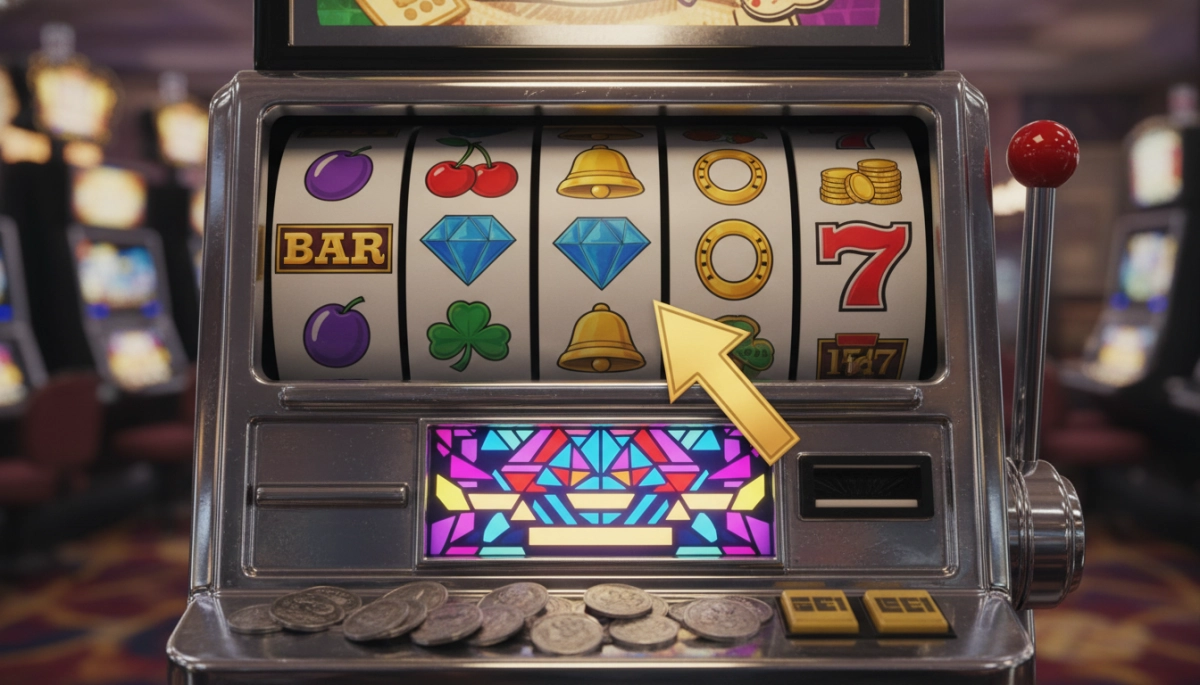
Instead of mapping one RNG output to a physical reel stop, modern slots use virtual reels—arrays of symbol stops where some symbols appear multiple times. By assigning more stops to a low-value symbol and fewer to a jackpot symbol, developers control frequency without changing what you see on the physical reels. When the RNG returns a number, it points to an index within those virtual reels, and that index dictates the visible symbols and potential payouts.
RTP, volatility, and your experience at the machine
Return to Player (RTP) is the theoretical long-term percentage of wagered money that players get back, determined by the symbol weightings and paytable. Volatility (or variance) describes how that return is distributed over time—high volatility means rare big wins and long dry spells; low volatility gives frequent small wins. Because the RNG ensures each spin is independent, you need to think in large numbers: RTP holds over millions of spins, not a single session.
Having seen how random numbers are generated and mapped to outcomes, the next section will examine how regulators and testing labs verify RNG integrity and what certifications you can look for when choosing a fair game.
How regulators and testing labs verify RNG integrity
Regulators don’t take randomness on faith — they require independent proof that an RNG behaves as advertised. Certification typically starts before a game is launched: the developer submits the RNG code, the mapping between RNG outputs and virtual-reel indexes, and the paytable so the testing lab can reproduce outcomes in a controlled environment. The lab performs a mix of code review, statistical testing, and functional validation.
Statistical tests probe whether the generator’s output is uniformly distributed and free of detectable patterns. Test suites often include NIST STS, TestU01, and Dieharder; these run millions of numbers through dozens of statistical batteries to look for bias, correlation, or short periods. Labs also validate that the RNG’s period is long enough (so sequences don’t repeat within practical timeframes) and that the seed or entropy source is robust.
For PRNG implementations, auditors review the algorithm and its seeding mechanism to confirm it’s deterministic yet unpredictable in practice — for instance, by checking that the seed is derived from high-entropy sources and that reseeding occurs safely. If a hardware RNG (true random number generator) is used, the physical entropy source is examined: electrical noise, oscillator jitter, or other physical phenomena must be measured and shown to produce sufficient randomness. Hardware RNGs are often validated to cryptographic standards or FIPS requirements when applicable.
Beyond raw numbers, labs test the mapping from RNG output to visible outcomes. That includes verifying virtual-reel tables, symbol weighting, and whether the displayed RTP and volatility metrics match empirical results from simulated spins. Functional testing simulates millions of spins to confirm that payback percentages and hit frequencies fall within expected tolerances.
Regulatory oversight continues after certification. Many authorities require periodic re-testing, change-control audits when software is updated, and logging requirements so investigators can trace suspicious activity. Common independent labs include GLI (Gaming Laboratories International), iTech Labs, BMM Testlabs, and eCOGRA; respected regulators include the UK Gambling Commission, Malta Gaming Authority, and various U.S. state regulators. A seal from a reputable lab plus an up-to-date licensing statement are strong indicators a game has passed scrutiny.
What players can check: spotting certified and provably fair games
RTP information should be available either in the game info or on the operator’s site. Remember, RTP is a long-term theoretical metric; it doesn’t predict short sessions but it should align with independent audit reports. If a game offers a downloadable or viewable audit report, skim for the test date — recent re-testing is better — and note whether the lab verified both RNG output and software change-control procedures.
A growing subset of games, especially in cryptocurrency casinos, advertise “provably fair” mechanisms. These use cryptographic techniques where the server provides a hashed server seed, the player supplies a client seed, and the outcome can be independently recalculated and verified. Provably fair systems are transparent in a way RNG-based games aren’t, but they’re not inherently superior — only as good as their implementation and the site’s honesty in publishing seeds and nonces.
If something feels off — wildly differing RTPs for the same title across sites, a missing lab seal, or an operator unwilling to provide certification on request — treat it as a red flag. Reputable casinos respond readily with links to current certificates. For most players, checking the license, lab seal, and RTP disclosure will give a reliable sense of whether the RNG behind a slot has been properly vetted.
Practical tips for playing informed
Before you spin
- Check the operator’s license and testing-lab seals—these are your first line of trust verification.
- Look up the published RTP in the game info or the casino’s help pages and prefer games with transparent audit history.
- Set a bankroll and session limits based on volatility: choose lower-volatility titles for longer, steadier play and higher-volatility titles only if you accept bigger swings.
During play
- Remember each spin is independent—past results don’t change future odds.
- Use the game’s settings (autoplay limits, stop-loss, session timers) to enforce the limits you set for yourself.
- If a title’s behavior seems inconsistent with published information, pause play and request certification details from the operator.
Final perspectives for the curious player
Understanding RNGs won’t make every session predictable, but it gives you practical tools: how outcomes are generated, what certifications to look for, and how to pick games that match your risk tolerance. Keep regulatory seals and up-to-date audit reports in mind when choosing where to play, and turn to official resources if you want further guidance—for example, the UK Gambling Commission provides licensing details and player protections. Above all, use this knowledge to play responsibly, make informed choices, and treat slot play as entertainment rather than a reliable source of income.