
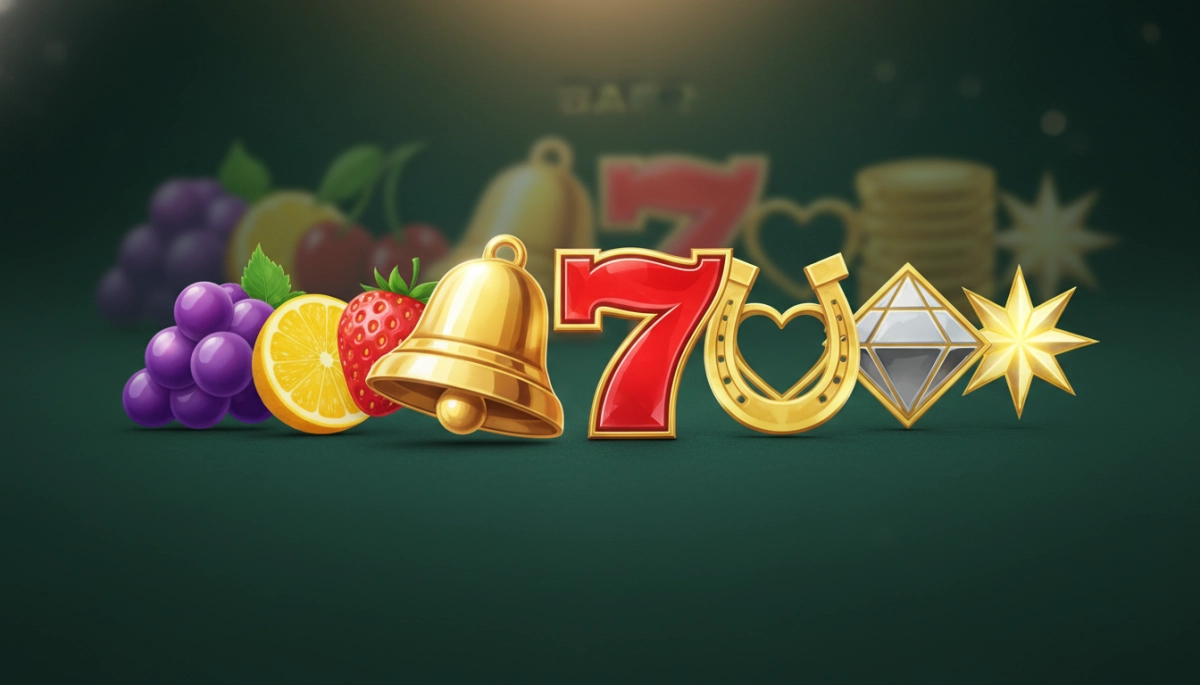
How slot symbols shape what you win and how you play
When you first sit down at a slot or load a digital slot game, the spinning reels and colorful icons might feel like decoration. In reality, each symbol carries meaning: it determines how much you can win, whether special features trigger, and how often wins occur. This guide helps you understand the most common symbols and the basic mechanics behind them so you can make smarter choices when you bet.
Recognize classic symbols and their basic value
Many slots still use symbols that date back to mechanical machines. Knowing these classic icons gives you a quick sense of likely payouts and game style.
-
Fruits and bells — low-to-medium value
Cherries, lemons, oranges, plums and the Liberty Bell are staples from fruit machines. These icons usually pay smaller amounts but appear more frequently. If you want steady, modest returns rather than rare big wins, games heavy on fruit symbols often fit that profile.
-
Bars and sevens — mid-to-high value
Single, double and triple BARs and the lucky 7 are typically higher-paying symbols. Three 7s on a payline often represent one of the top standard payouts in classic-themed games.
-
Playing-card symbols — filler icons with low payouts
In many modern slots, A, K, Q, J or 10 symbols act as low-value fills that keep reels busy. Because they appear frequently and pay less, they balance the paytable against fewer high-value character or themed icons.
Identify special symbols that change gameplay
Beyond base symbols, special icons introduce mechanics that can boost payouts, unlock bonus rounds, or change the odds of forming winning combinations.
-
Wild symbols — substitutes and pay boosters
Wilds act like jokers: they substitute for other symbols to complete winning lines. Some wilds simply replace one symbol; others expand, stick in place, or come with multipliers that increase the payout when they help form a win.
-
Scatter symbols — trigger free spins and bonuses
Scatters pay or trigger features regardless of paylines, meaning they can award payouts when they appear anywhere on the reels. Typically, landing a set number of scatters starts free spins, mini-games, or bonus rounds.
-
Bonus and feature icons — entry to mini-games
Some symbols unlock interactive bonus rounds, pick-and-click games, or progressive jackpot qualifiers. These symbols often require specific positions or counts to activate the extra game.
-
Multipliers, stacked and sticky symbols — varied effects
Multipliers increase the value of a win by a fixed factor. Stacked symbols fill an entire reel and can create multiple payline wins, while sticky wilds remain in place for several spins to boost your chance of continued wins.
To use this knowledge effectively, learn to read the game’s paytable and note which symbols are most valuable or trigger features; that will shape your strategy and expectations. In the next section you’ll learn how paylines, volatility and the paytable work together to affect your chances and bankroll management.
How paylines and “ways to win” affect what you see on screen
Paylines determine which symbol alignments count as wins. Traditional slots use fixed paylines (left-to-right lines), while modern games often offer dozens — sometimes hundreds — of ways to win. Some use “243 ways” or “ways-to-win” mechanics where identical symbols on adjacent reels pay regardless of position, and others use cluster pays where groups of matching symbols anywhere on the grid form wins.
Why this matters: the payline system interacts with symbol design and frequency to shape your experience. A high-paying icon may look valuable, but if the game has only a few paylines or restrictive placement rules, that symbol’s practical chance of producing a payout is lower. Conversely, a mid-value symbol paired with 243 ways can create frequent modest wins because many more combinations count.
- Fixed paylines: Fewer winning lines mean rarer but sometimes larger line wins; ideal for players who chase classic-style payouts.
- Ways-to-win and cluster pays: Increase hit frequency and make stacked or repeated symbols much more powerful because they can form multiple simultaneous wins.
- Active pays vs. bet-per-line: Games that let you change active paylines give you control over variance — turning lines off reduces cost but also reduces chances to hit.
Volatility, hit frequency and how symbol distribution dictates risk
Volatility (also called variance) describes how often and how big wins tend to be. Symbol distribution — the hidden weighting of symbols on virtual reels — is the main technical driver behind volatility. Two games can look identical but behave very differently if high-value symbols are rarer on one than the other.
Practical patterns to watch for:
- Low volatility: More frequent wins, smaller payouts. Expect many low-value symbols (playing cards, small fruit icons) and regular scatter triggers for modest bonuses.
- Medium volatility: A mix of small steady payouts and occasional larger hits, often with wild multipliers and stacked features.
- High volatility: Rare but big payouts. High-value themed symbols, big multipliers, and bonus-heavy mechanics dominate, but scatter and wild appearances are less frequent.
Remember: volatility doesn’t change the game’s theoretical return (RTP) but it does affect bankroll swings. If you prefer longer sessions with small fluctuations, pick low-to-medium volatility; if you can absorb dry spells chasing bigger wins, high volatility may suit you better.
Read the paytable and use symbols to shape your bankroll strategy
Before you spin, open the paytable. It tells you exact payouts, how many symbols trigger features, whether scatters pay anywhere, whether wilds substitute on bonus rounds, and any spin multipliers. Also check the max win and whether the game contributes to progressives or jackpots.
Simple strategy adjustments based on symbol behavior:
- If scatters trigger free spins and they pay anywhere, smaller bets across more spins can give you more chances at the trigger without overspending.
- When stacked or sticky wilds are common, increasing bet size slightly can be justified since these features create clustered wins across many paylines.
- For high-volatility titles with big multipliers, set a session budget and a stop-win limit — long losing runs are normal, and staying disciplined preserves your bankroll.
Use demo mode to observe symbol patterns and feature frequency before betting real money. That quick reconnaissance helps you match bet size and session length to the game’s symbol-driven behavior rather than chasing appearances alone.
Play smarter: next steps and safer habits
Keep curiosity and discipline together. Learn by doing (use demo modes), set clear session limits, and focus on understanding one game at a time rather than chasing hits. Treat symbol behavior as part of a wider approach that includes bankroll control, game selection, and knowing when to stop.
Practical next steps
- Try a few spins in demo to observe symbol frequency and feature triggers without risking money.
- Open the paytable every time you try a new game so you aren’t surprised by feature rules or symbol priorities.
- Set a session budget and a stop-win limit before you play; stick to them to manage variance and preserve enjoyment.
- If gambling stops being fun or you need help, seek professional resources for support and advice.
Approach slots as entertainment: understand the symbols, respect the randomness, and make choices that keep your play controlled and enjoyable.