
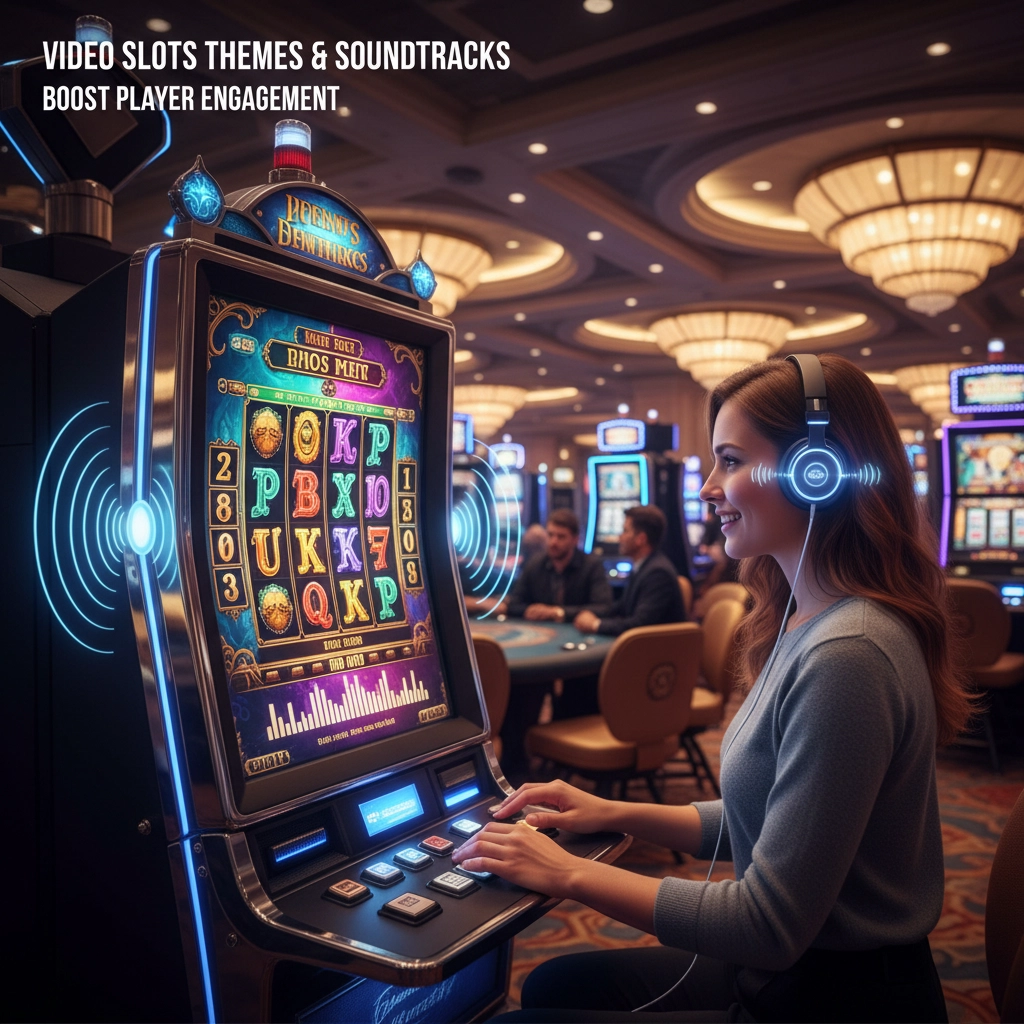
Why themes and soundtracks shape your slot-playing experience
When you open a video slot, the first thing you notice isn’t always the paytable — it’s the look and sound. Themes and soundtracks set expectations, prompt emotional responses, and guide your actions. A coherent visual world paired with an evocative soundtrack makes gameplay feel meaningful: you don’t simply press spin, you embark on a short narrative or sensory experience.
Understanding this relationship helps you evaluate slots not only as games of chance but as crafted experiences. Developers use thematic choices and audio design to influence attention, perceived value of features, and the likelihood you’ll return later.
How different themes attract player attention and shape behavior
Thematic decisions influence who tries a slot and how long they play. When you encounter an engaging theme, you are more likely to explore bonus features and stay past the first few spins. Common theme categories and how they affect behavior include:
- Adventure and exploration: Fast pacing and reward-rich bonuses encourage trial and sustained engagement because you feel progress and discovery.
- Mythology and fantasy: Immersive lore and iconic symbols create emotional attachment, increasing return visits by building a memorable identity.
- Branded and pop-culture: Familiar IPs lower the cognitive cost of trying a game — you already know the story and characters, which shortens your onboarding time.
- Classic and retro: Nostalgic visuals and simple mechanics appeal to players seeking familiarity and comfort, often yielding longer low-intensity sessions.
Crucially, theme alone rarely carries the full weight. Visuals and narrative must align with audio to feel believable; mismatched soundtrack and imagery can break immersion and reduce trust in the game’s quality.
How soundtracks and audio cues increase immersion and guide decisions
Audio does much of the heavy lifting when it comes to moment-to-moment engagement. Whereas visuals create context, sound confirms actions and punctuates rewards. If you’re rewarded with a satisfying sting or an evolving melody after a big win, your brain links the sound to positive outcomes and wants to experience it again.
Key audio elements that influence your reaction and play patterns
- Tempo and rhythm: Faster tempos increase arousal and can speed up perceived time on task; slower themes promote relaxed exploration.
- Motifs and leitmotifs: Short recurring musical phrases tied to features reinforce recognition and anticipation.
- Event sounds: Distinct cues for wins, near-misses, and bonus triggers steer attention and clarify outcomes.
- Adaptive audio: Dynamic music that reacts to game states (e.g., intensifying during free spins) heightens suspense and reward salience.
- Licensed tracks: Familiar songs can accelerate emotional connection but also raise player expectations for overall production quality.
By combining theme-driven visuals with thoughtfully layered audio, developers guide your emotional journey and behavioral choices. In the next section you’ll explore specific design techniques, measurable engagement metrics, and case studies that show how top-performing slots integrate theme and soundtrack to boost retention and conversion.
Design techniques that fuse theme and soundtrack into engaging gameplay
Successful slots don’t leave audio and visuals to chance; they use deliberate techniques that tighten the connection between design and player response. A handful of repeatable techniques consistently boost immersion and guide choices:
- Diegetic layering: Blend sounds that belong inside the game world (character voices, environmental ambience) with non-diegetic cues (reward stings, UI blips). Diegetic sounds make the world feel lived-in; non-diegetic sounds clarify outcomes. The balance determines whether a slot feels cinematic or mechanically transparent.
- Progressive musical arcs: Compose tracks that evolve with gameplay states. Introduce subtle changes as players enter bonus modes, and crescendo during big-win animations. These arcs create a narrative tempo — players sense forward momentum even during RNG-driven sessions.
- Micro-interaction feedback: Use short, informative audio bites for common interactions (spin, bet change, info lookup). Clear micro-feedback reduces cognitive friction: players immediately know an input registered without glancing away from the reels.
- Salience engineering for features: Attach distinctive leitmotifs to special features (wilds, scatters, modifiers). When a motif plays, players instantly recognize what triggered; this reinforces feature value and increases the chance they’ll pursue it again.
- Pacing through silence and restraint: Strategic quiet moments — a drop in music during a suspenseful spin — can amplify subsequent rewards. Over-saturation dulls emotional impact; well-timed restraint makes wins feel larger.
- Accessibility and localization: Offer volume controls, visual substitutes for key audio cues, and culturally appropriate tracks. Tailoring audio and thematic references improves inclusion and broadens appeal across markets.
Measuring how theme and soundtrack affect engagement
Design confidence comes from measurement. The right metrics and methods reveal how much thematic and audio choices move_player behavior and revenue.
- Core engagement KPIs: Session length, spins per session, time to first bonus, feature-trigger rate, and retention cohorts (D1/D7/D30). Changes in any of these after an audio/theme tweak indicate impact.
- Feature-level analytics: Track conversion funnels for bonus rounds and in-game purchases. For example, measure the percentage of players who enter a free-spin mode and then cash out versus those who drop off — correlate with sound variations to isolate effects.
- Behavioral micro-metrics: Pay attention to hesitation times (how long players take to press spin after a big event), repeated bet changes, and audio mute rates. High mute rates can signal either poor music fit or cultural mismatch.
- A/B tests and staged rollouts: Run controlled comparisons: original soundtrack versus alternate tempo, themed visuals versus neutral, or full vs. muted event cues. Use statistical significance testing and segment results by player type (new vs. veteran).
- Qualitative and biometric methods: Combine surveys, playtests, and lab studies with eye-tracking or heart-rate monitoring to capture emotional responses that raw telemetry misses. These insights explain why a change moved a metric.
Importantly, pair analytics with ethical guardrails. Measuring what increases engagement is valuable — exploiting psychological levers without regard for responsible play is not. Use findings to improve clarity, enjoyment, and accessibility while keeping mechanics fair and transparent.
Putting design into practice
Designers and teams that want to elevate player engagement should treat theme and soundtrack as strategic levers, not decorative extras. Start small: add distinctive micro-feedback, map a leitmotif to a single feature, and run an A/B test focused on one KPI. Iterate rapidly, document what moves behavior, and scale the combinations that show clear uplift while preserving fairness and accessibility. For broader guidance on industry best practices and audio standards, consult IGDA resources on game audio.
Frequently Asked Questions
How can I tell if a soundtrack change actually improves engagement?
Use a mix of metrics and methods: run an A/B test with session length, spins per session, and feature-trigger rate as primary KPIs; monitor mute rates and hesitation times as behavioral signals; and complement telemetry with short-player surveys or lab tests to capture subjective response. Statistical significance and segmented analysis (new vs. veteran players) help isolate true effects.
What are quick audio tweaks that have outsized impact?
High-impact, low-effort changes include adding clear micro-interaction cues for spins and bet changes, assigning a short motif to bonus triggers, and introducing a brief musical swell for moderate wins. Also implement accessible volume controls and visual equivalents for key audio cues to broaden appeal quickly.
How do I balance immersive music with responsible design?
Prioritize transparency and player control: avoid audio that obscures important game-state information, offer easy mute/volume options, and refrain from using relentless crescendos to drive play. Test changes for disproportionate effects on vulnerable cohorts and align design choices with responsible-play policies and regional regulations.